

Customs Clearance in India
Picture this. Your shipment’s sitting at the port. Nobody can tell you exactly what’s wrong, just that “there’s a query” and someone’s looking into it. Days go by. Sound familiar? It should, because it happens to seasoned shippers all the time. Not just first-timers. One missing signature. One wrong digit in an HS code. That’s genuinely all it takes to turn a two-day clearance into a two-week nightmare.
That’s where AEON India comes in. We’re part of AEON Shipping. The same group has been moving cars, motorbikes, boats, yachts, oversized cargo and household goods in and out of Dubai for 17 years. In India, we’ve built a customs clearance service around one simple idea: your goods shouldn’t be held hostage by red tape. Whether you’re bringing in industrial machinery, exporting handicrafts, or shipping a family’s entire household across borders, we act as your customs clearance agent. We take the mess off your plate.
What is the Custom Clearance Procedure in India?
Put simply, customs clearance is the process of getting your goods legally approved to enter or leave India. Customs checks your paperwork, confirms the value and classification of what’s being shipped, works out the duty owed, and then lets it through. Sounds simple. It rarely is.
Custom Clearance Process
Every shipment, without exception, runs through the Indian Customs Electronic Data Interchange System, or ICES for short. And you’ll need your paperwork lined up before it does. Here’s what you’ll basically need for paperwork:
- Bill of Entry or Shipping Bill,
- Invoice,
- Packing list
- Bill of lading or Airway bill,
- Your Import Export Code.
If you’re shipping machinery, add technical literature. Claiming a preferential duty rate? You’ll want a certificate of origin, too. It really does depend on what’s in the container.
Here’s the bit people often miss: it’s not just paperwork. Customs can call for a physical inspection at any point. Get the HS code wrong by even one digit, and the whole assessment can go sideways.

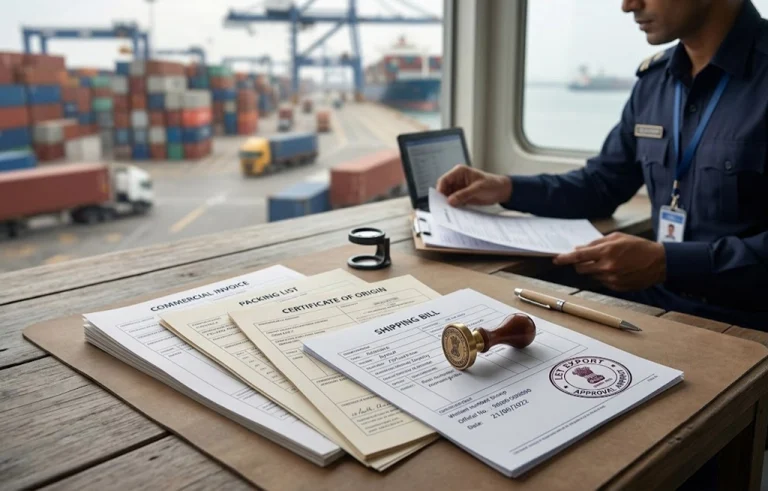
Custom Clearance Process for Exports
Exporting from India starts before your goods ever reach the port. You’ll need an Import Export Code from the DGFT. Shipping under an export promotion scheme? Those licences need to be registered with customs first, too.
Once that’s sorted, we file the shipping bill through ICES. It goes in along with your invoice, packing list, and any certificates specific to your goods. Think certificates of origin for cultural exports, or quality certifications for engineering products. Customs checks the value, the classification, and whether your goods are even permitted for export under the current policy. If everything checks out, they issue a “let export” order. Your cargo gets inspected, sometimes just a spot check, sometimes a full examination. Once loading is confirmed, you get your shipped-on-board endorsement.
Simple in theory. But we’ve seen exporters lose days over small things. A certificate of origin that wasn’t quite the right format. An invoice value that didn’t line up with what was declared elsewhere. Little things. Big consequences.
Custom Clearance Process for Imports
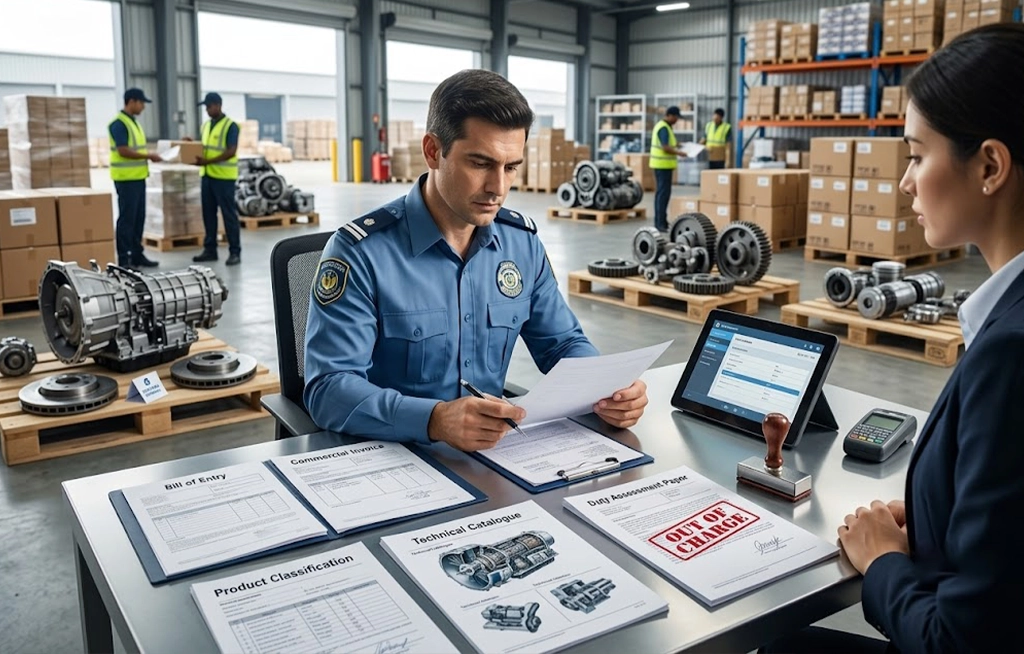
Imports follow a similar rhythm, but with their own quirks. After your goods arrive, we file the Bill of Entry. It declares what’s coming in, its value, and its classification. Customs then assesses the duty owed. This might include basic customs duty and, depending on the goods, extra charges like anti-dumping or safeguard duties.
Sometimes customs want to physically examine the cargo before finalising the assessment. Other times, they’ll assess first and inspect after, on a random selection basis. Once duty is paid, and everything’s in order, you get an “out of charge” order. Your goods are free to move.
Household goods and personal shipments often need extra documentation, like a transfer of residence certificate.
Commercial cargo, think machinery, plastics, or automotive parts, sometimes needs technical write-ups and catalogues too. Especially if the classification isn’t obvious at a glance. Miss one of these, and you’re back to square one, waiting.
Why choose AEON India to Handle Your Customs Clearance?
Look, anyone can promise a “smooth process.” What actually matters is whether the person handling your shipment has done this exact thing before, for the exact type of cargo you’re shipping. We have done it countless times for various cargo items that AEON imports and exports. Here’s why shippers choose AEON India for their customs clearance:
- Wide Cargo Expertise: We clear commercial cargo (machinery, plastics, perishables, oversized loads, garments), consumer goods across engineering, industrial, construction, automotive and plastic products, plus crafts, cultural exports, and full household goods relocations.
- India-UAE Trade Know-How: Because we’re connected to AEON’s Dubai operation, we understand both ends of the India-UAE trade corridor, not just the Indian side of it.
- End-to-End Documentation Handling: We manage the paperwork, the duty calculations, and the liaison with customs officers, including the inevitable back-and-forth when something needs amending.
- One Point of Contact: You deal with one team, not three different agents chasing three different pieces of your shipment.
- Experience with Oversized and Vehicle Cargo: We’ve handled enough oversized cargo and vehicle shipments to know exactly which extra certificates and inspections to prepare for, before they become a surprise.
With AEON India, your shipment is in the hands that have done this before.
FAQs’ About Customs Clearance Services in India
Questions flood in when you’re going to clear some cargo. We get it. That’s why we put together this section. Let’s clear things up about Customs Clearance, shall we?
Is AEON India a Trusted Customs Clearance Agent in India?
Yes. We’re part of the established AEON Shipping group, based in Dubai, and our India team specialises in vehicles, boats and yachts, oversized cargo, household goods, and a wide range of commercial and consumer goods. Ask us for references from similar shipments; we’re happy to share them.
How Long is the Customs Clearance Process in India?
It depends. A straightforward shipment with clean paperwork can clear in a couple of days. Add a physical inspection, a documentation query, or a busy port during peak season (October to December), and it can stretch to a week or more. Accurate documentation is the biggest factor within your control, which is why we double-check everything before submission.
How Much Does Customs Clearance Cost in India?
Costs vary by cargo type, value, and the applicable duty rate. On top of customs duty, expect handling charges and, if clearance is delayed, demurrage. We give you a clear cost breakdown upfront, so there’s no surprise invoice line later.
What Type of Documents are Required for Customs Clearance in India?
You’ll need:
- Bill of Entry (imports) or Shipping Bill (exports)
- Commercial invoice and packing list
- Bill of lading or airway bill
- Import Export Code
- Certificates of origin, licences, insurance documents, or technical literature, depending on your cargo
We’ll give you a tailored checklist based on your specific shipment, so nothing gets left out.
Will AEON India Assist me with Taxes and Customs Clearance Documents?
Yes. We calculate the duty owed, explain what you’re paying and why, and manage the full document trail from filing through to final release. If customs raises a query, we handle that too.